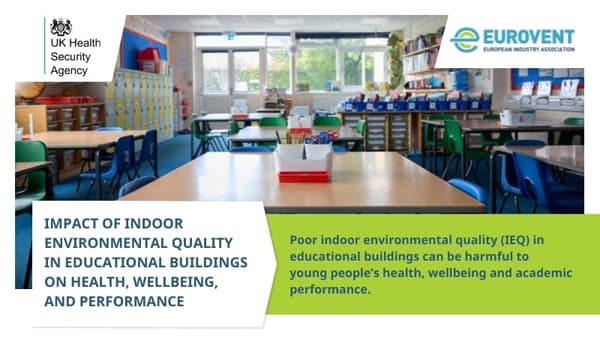
The conditions inside buildings and structures – especially humidity, thermal conditions, and the presence of chemical, biological and physical contaminants in indoor air – have a significant effect on the health and comfort of occupants. Market failures such as information deficits, split incentives, and externalities, are preventing many buildings in the EU from meeting generally accepted benchmarks of Indoor Environmental Quality. Eurovent advocates for regulatory solutions that can overcome these market failures to ensure that everyone can live, learn, and work in healthy and comfortable indoor spaces.
The Commission’s first assessment of national renovation plans finds strong long-term ambition, but significant gaps remain in delivery, financing and non-residential requirements.
The Commission has opened infringement procedures against all 27 Member States for failing to fully transpose the recast EPBD by the May 2026 deadline.
New guidance from the European Commission now enables Member States to monetise the health and GDP benefits of IEQ improvements in cost-optimality calculations under the EPBD.
New guidance from the European Commission clarifies how Member States should interpret and transpose the new provisions on technical building systems, indoor environmental quality and inspections in the recast EPBD.
A recent JRC study underlined the urgent need to accelerate the adoption of cleaner, more efficient, and renewable technologies in the heating and cooling sector. Heating and cooling systems remain a major source of air pollution.
The European Commission is organising a two-day online event on the preparation of guidance for the national implementation of EPBD recast, on 13 and 14 November.
On 23 October, the High Level Construction Forum – an initiative of DG GROW – organised a webinar on Indoor Air Quality, following the publication of a Staff Working Document on the topic.